
Exhibition
Immerse yourself in a space where history, art and technology overlap.
In the historic bathhouse of the Beelitz-Heilstätten, where sunlight once formed part of medical therapy, light now becomes an artistic material. After decades of vacancy, during which plaster fell from the walls and nature reclaimed the building, now projections, sound and digital technologies intervene in the historic architecture. The lost place becomes an art space.
The immersive and interactive works move between physical and digital space, nature and technology, reality and imagination. Light is refracted, water becomes a lens, a root becomes an organism, architecture becomes a dream, and the body itself becomes part of a gravitational field. Digital art leaves the screen behind and becomes spatially tangible.
In the process, it is not only the space that changes, but your own perception. Your gaze, your movement and your presence become part of what unfolds. What is real, what is digital? Where does nature end, and where does technology begin?
PLAN GROUND FLOOR
PLAN FIRST FLOOR
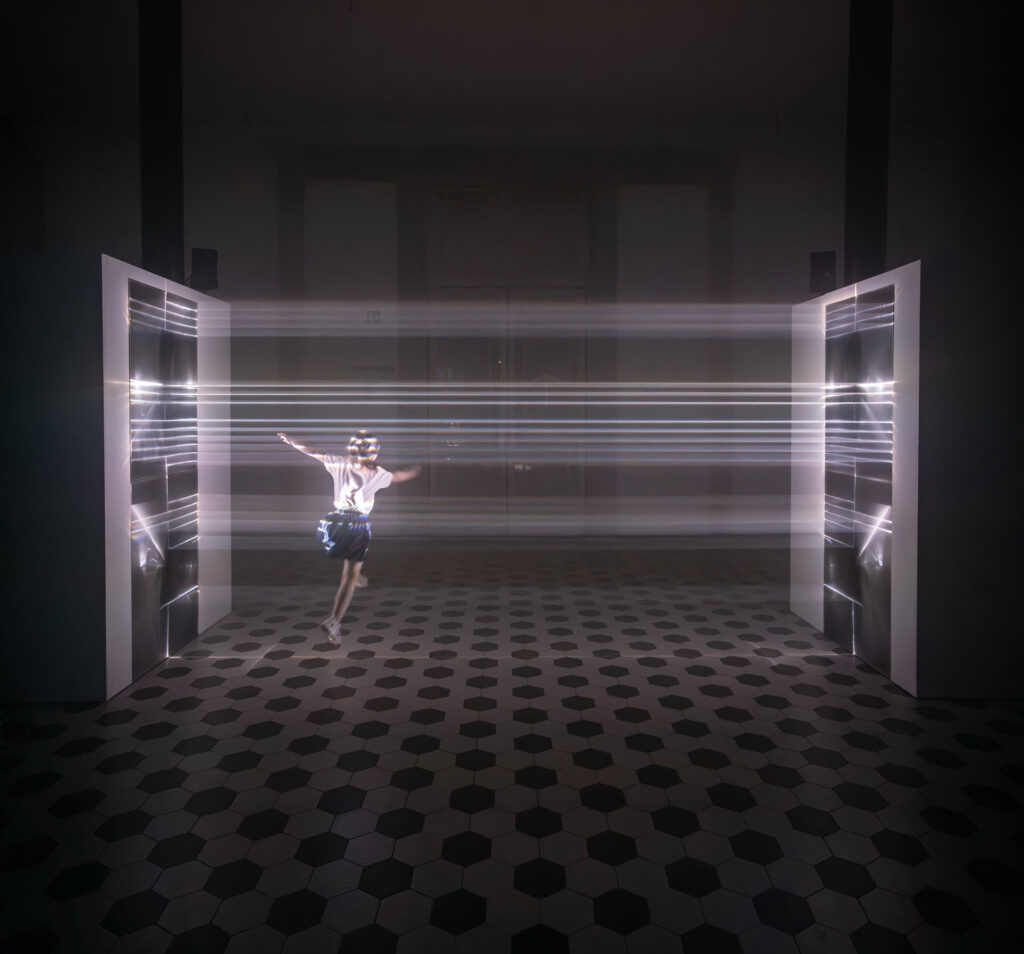
DIOPTRICON
To our perception, light usually radiates outward from a single source. But what if rays of light instead ran parallel to one another in space? From light sources, lenses and fog, a structure emerges that shifts with every perspective: light becomes volume, relates to the body, and opens into an apparent infinity.
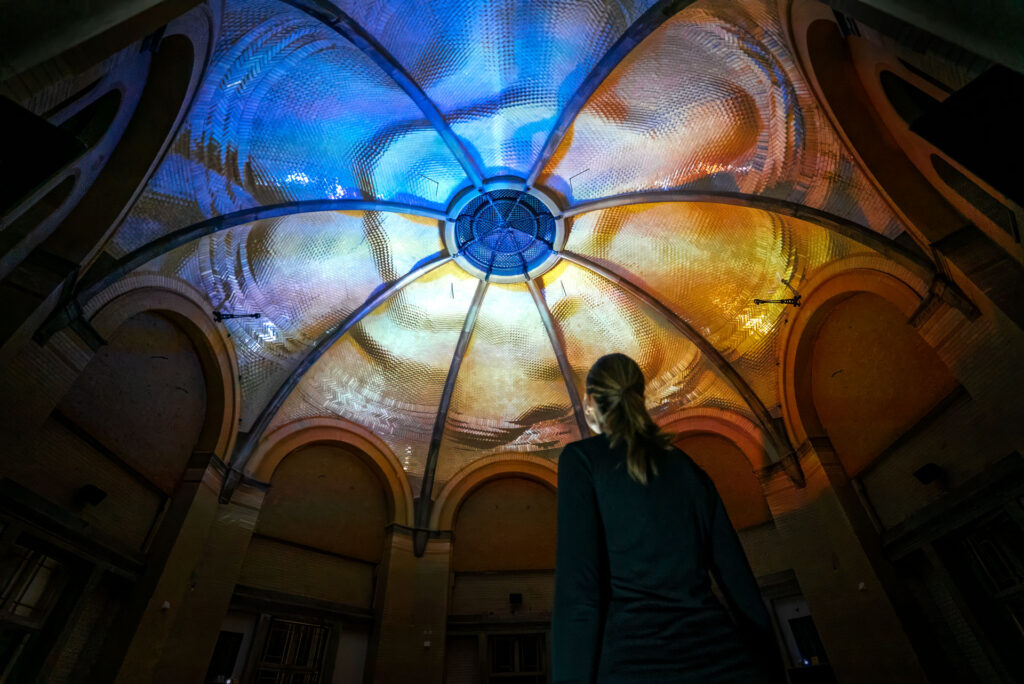
FIRMAMENT
Xenorama
In the historic domed hall, a site-specific projection blurs the line between reality and imagination. In atmospheric sequences, it tells the abstract history of the place: from its beginnings, when light and water were part of the therapy, through decay, to nature’s reclamation of the site. Finally, the ceiling breaks open, revealing a cosmic in-between space where light, sound and architecture merge with technology and geometry.
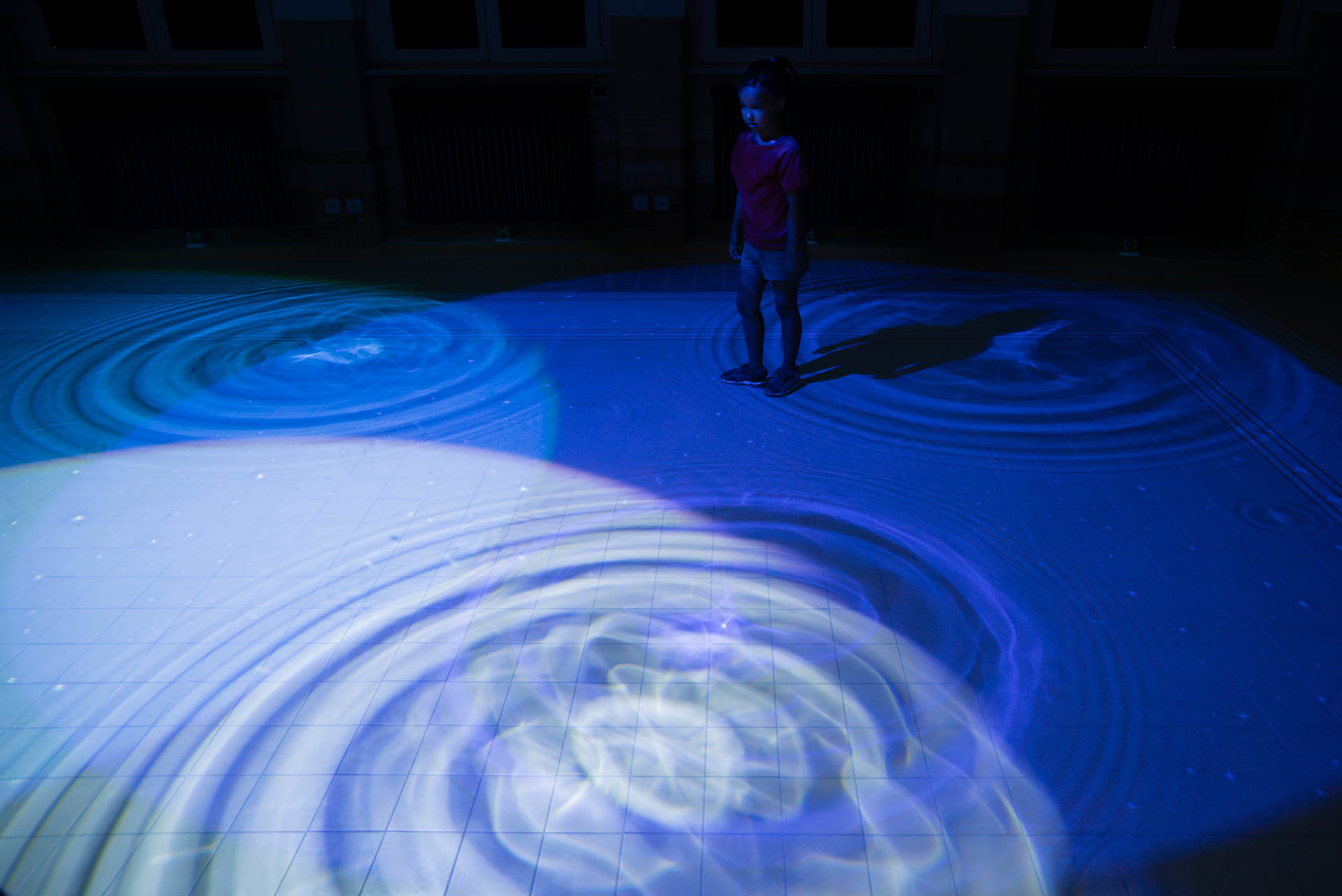
LIQUID LENS
A surface of water becomes a ‘liquid lens’, refracting the light of three light sources spreading through the space. As the surface turns liquid, the light transforms into an oscillation between light and shadow, a wave of presence and absence of photons, and an interplay of light, colour, sound and rhythm. In doing so, the installation points to two primal sources of life: light and water.
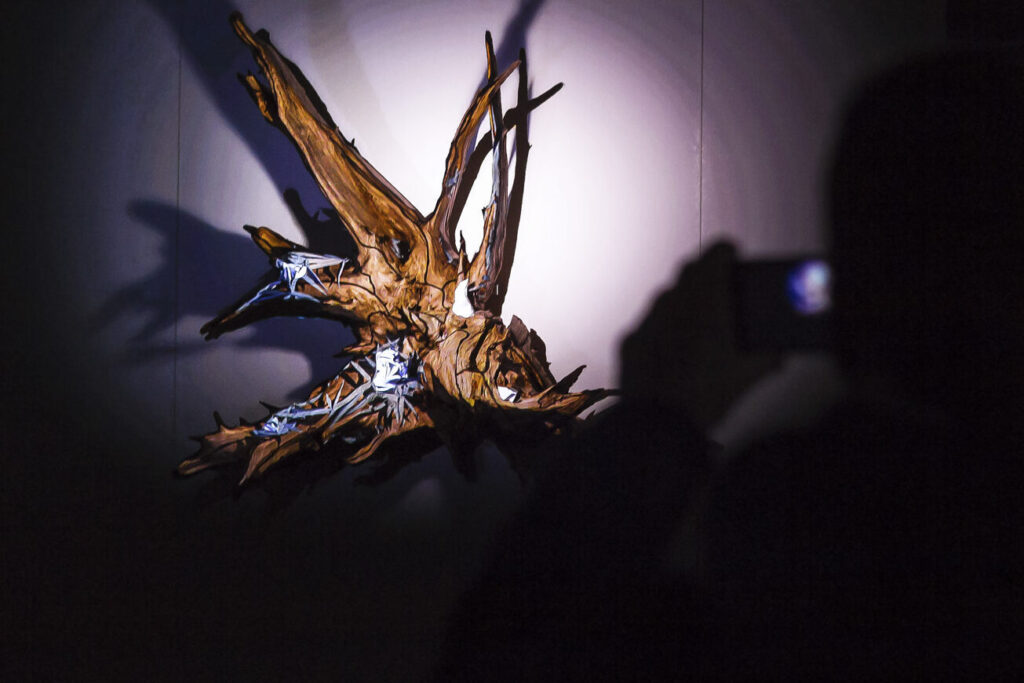
RADIX – ORGANISM/APPARATUS
A wooden root is brought to life through projection and sound: part organism, part apparatus. In an endlessly recurring metamorphosis, the sculpture shifts between its natural form and a technical object – both states locked in a struggle for dominance. The work explores the apparent opposition of organic form and digital aesthetics, along with the connections and dependencies that underlie it.
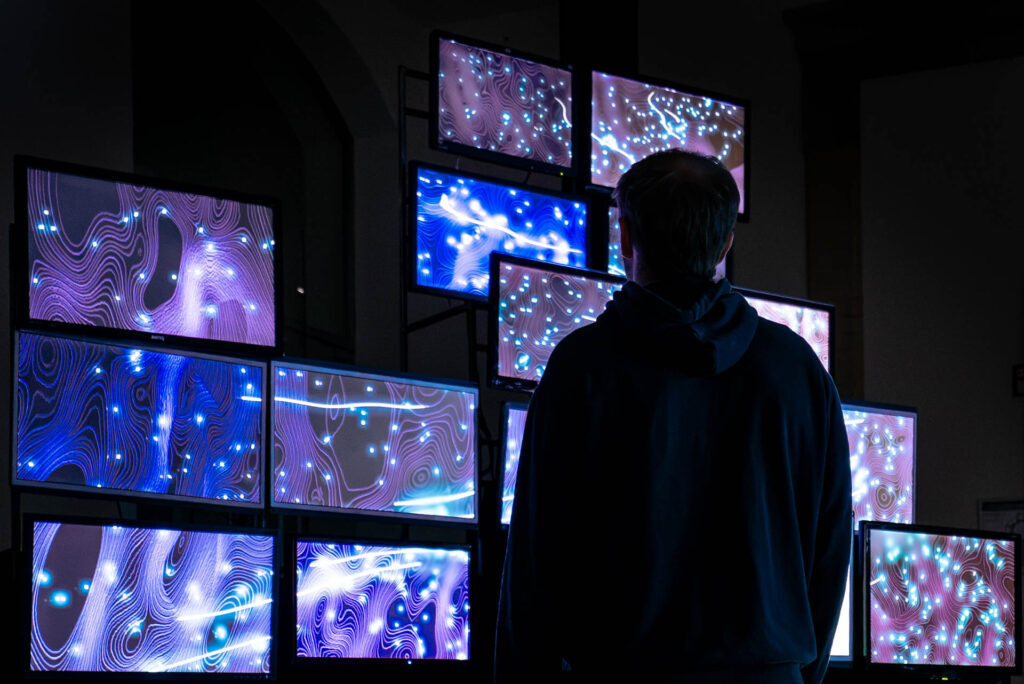
DIGITAL MIRROR
Xenorama
A digital mirror becomes an artistic medium: you face your digital self and interact with it. The installation explores the contrasts between real and digital space, between privacy and identifiability, between inclusion and exclusion, and between self-perception and self-presentation. Who is really looking at whom here: the human at their reflection, or the reflection at the human?
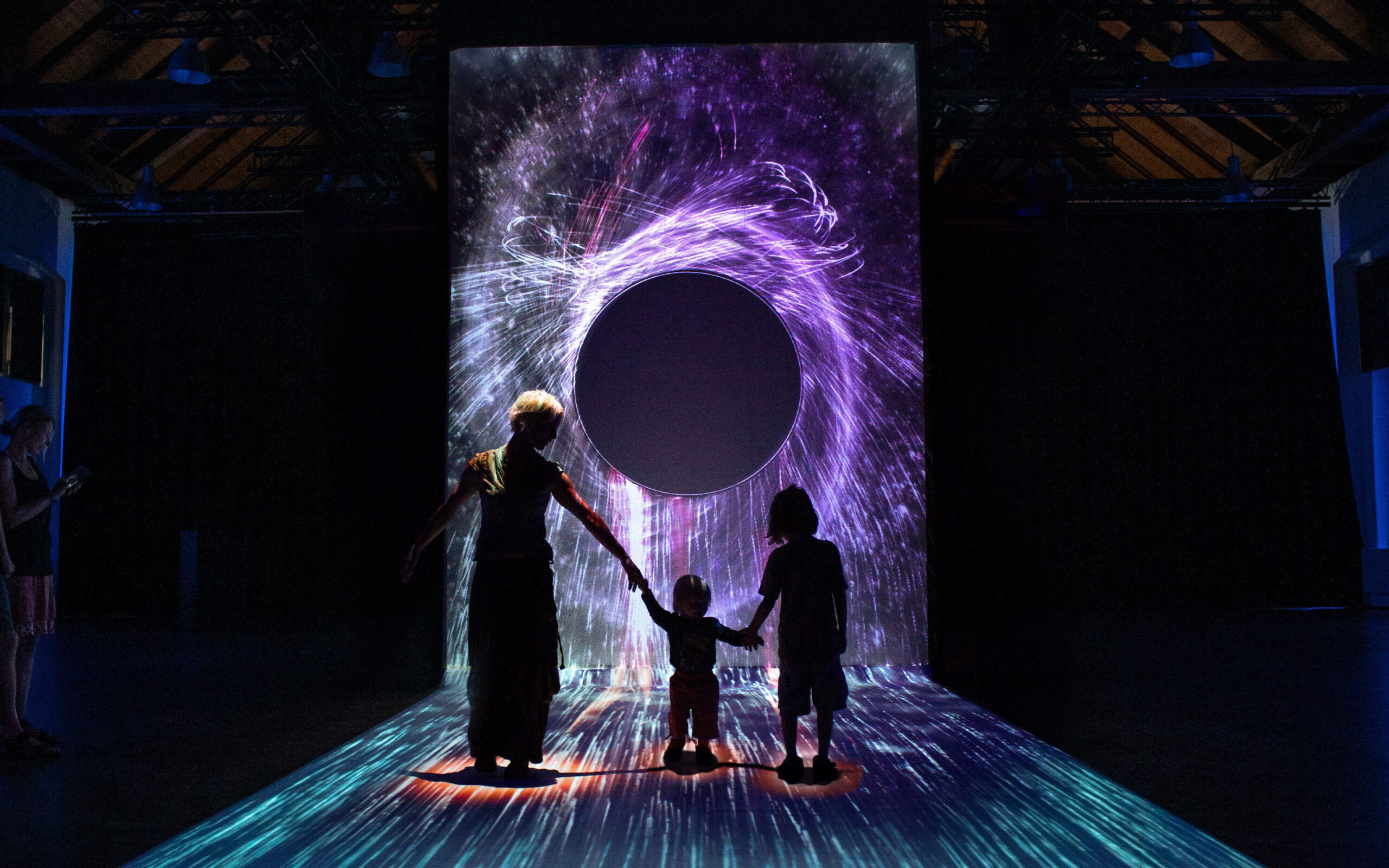
VORTEX LUCIS
This interactive light and sound sculpture examines phenomena of light in the vicinity of black holes. Their gravity is so powerful that neither matter nor light can escape it. You become part of the installation yourself: your presence and movement in the space generate light and sound, drawn toward the vortex at its centre. In this way, your presence produces visual and acoustic signals – an audiovisual simulation of the gravitational field.
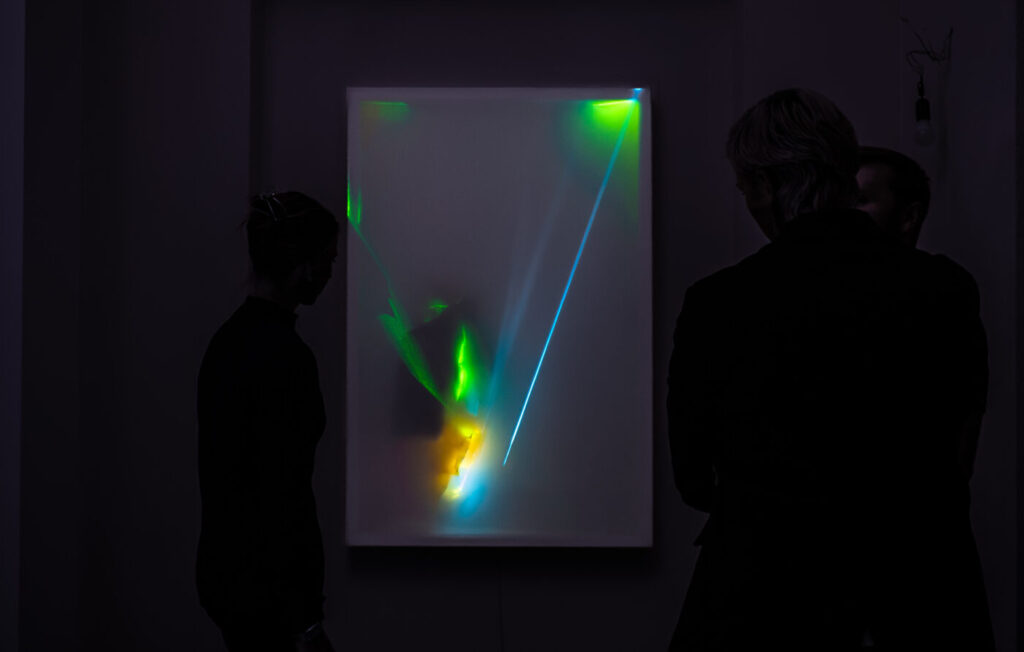
SINUS PLUS MINUS
In these light images, laser is used in a purely analogue process to explore the painterly qualities of light frequency and wavelength. The compositions glow from within, visible in the dark as resonances of an electromagnetic colour spectrum. Between physical-technical phenomena and sensory perception, a pictorial space unfolds in which light, colour and space enter into relation with one another.
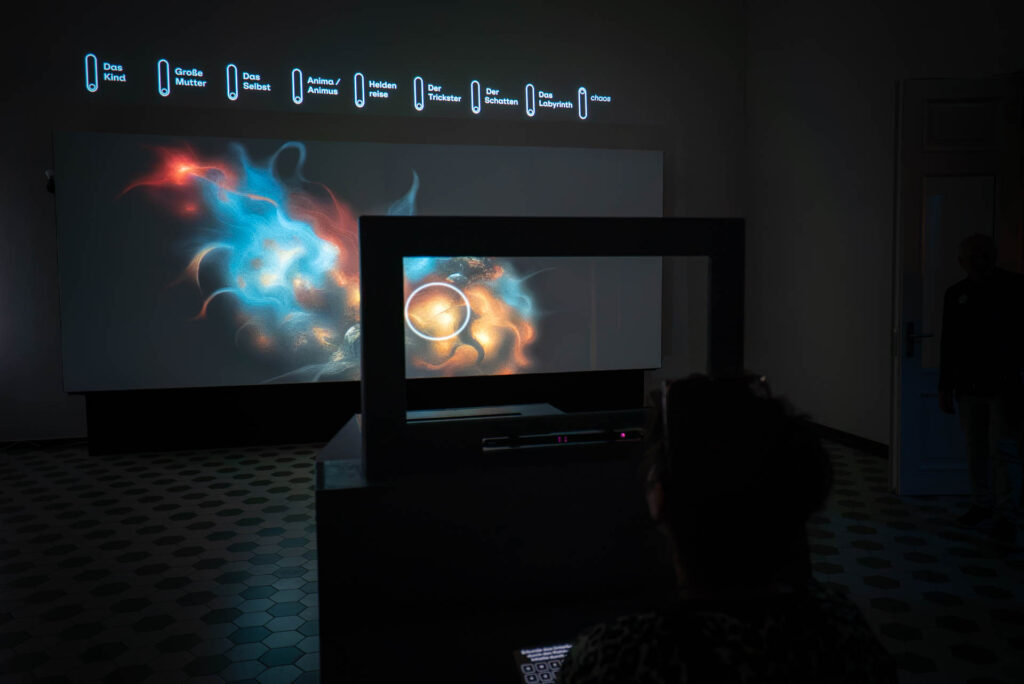
IMAGINATOR
In this installation, you explore the subconscious of an ‘artificial intelligence’. Through an eye-tracking system, wherever you look, dynamically meandering and overlapping image compositions emerge. These can be altered by combining different dream archetypes, or extended with your own influences. In doing so, an associative glimpse is revealed into the underlying training and image data of the AI – data drawn from the internet as the digital subconscious of our society.
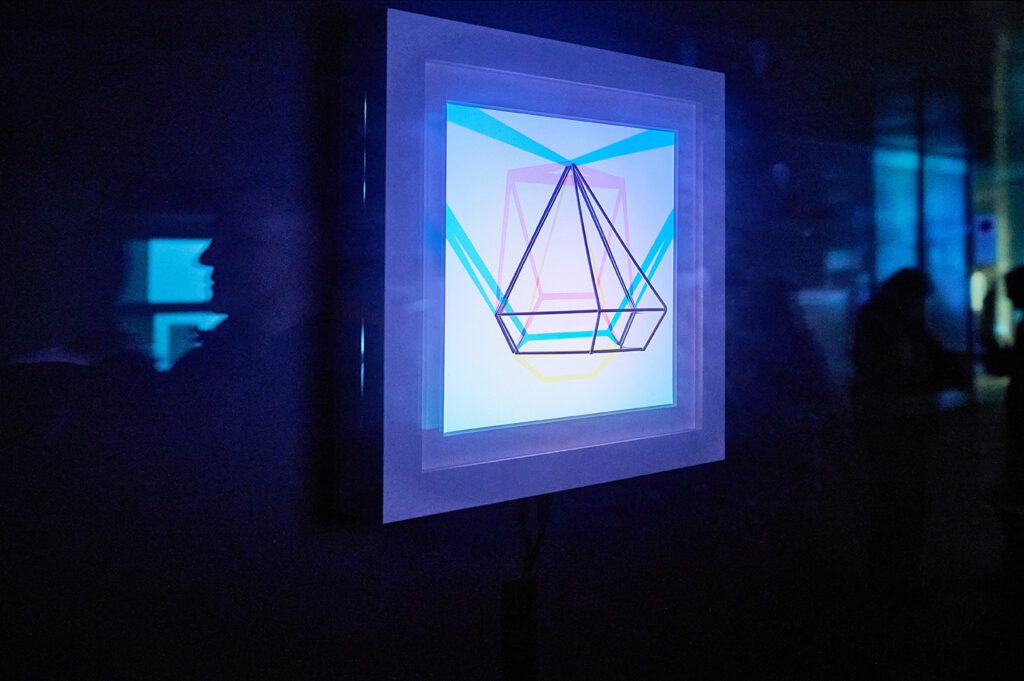
LUMINOUS OBJECTS
This series of objects explores the aesthetic potential of light-emitting surfaces at the intersection of image and sculpture. It plays with the properties of light, bodies and edges. An object-specific sound atmosphere complements the compositions and creates an interplay between virtual and physical properties. The result is a set of irritations that challenge our perception of materiality and space.
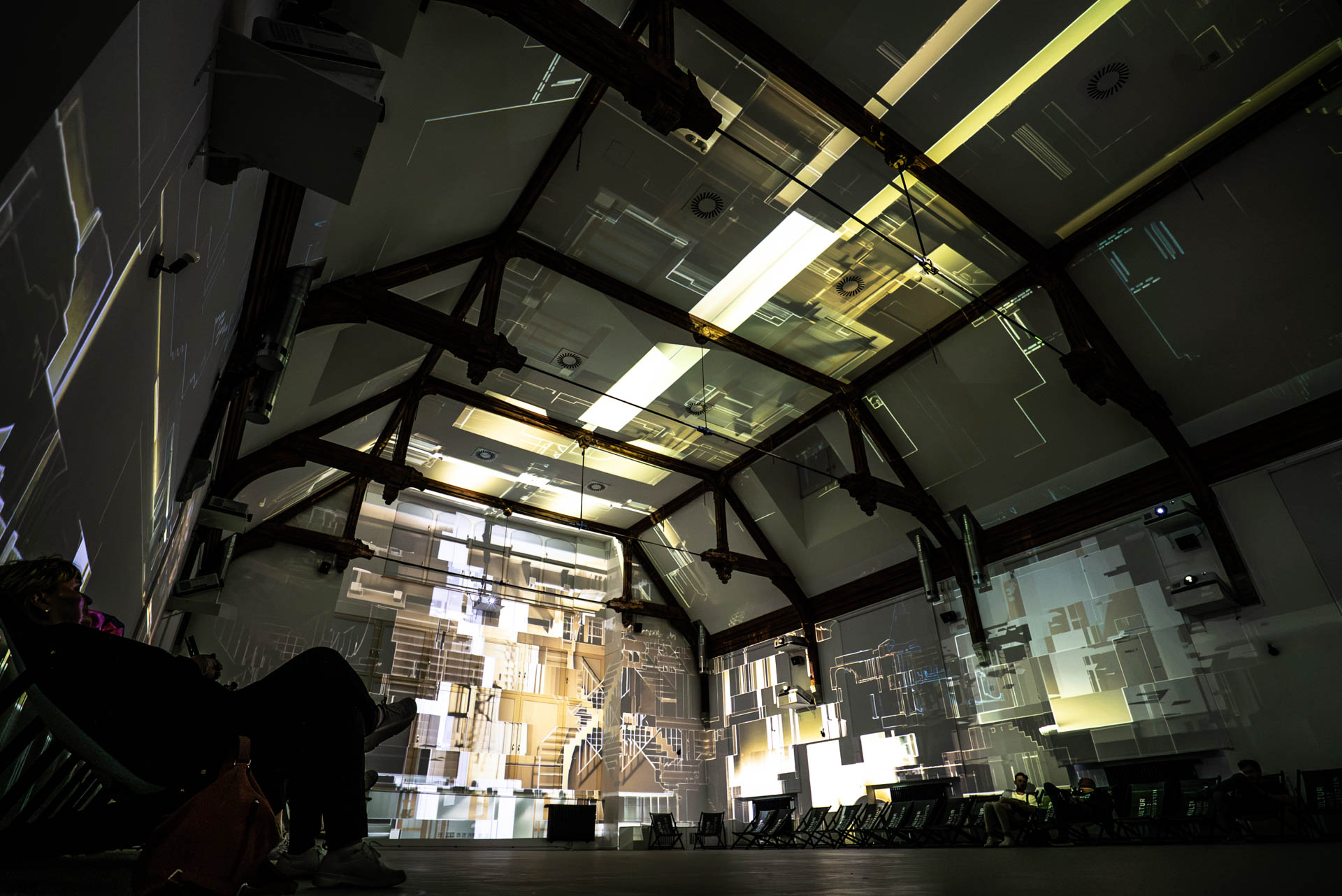
DREAMING ARCHITECTURE
Xenorama
What if architecture could manifest from a dream? Inspired by real processes from sleep research, the room transforms through several phases of dreaming. Freed from physical, logical and material constraints, the immersive 360° spatial projection exceeds the possible, develops surreal manifestations and dares a glance into the future. Before the mind’s eye, an ideal space takes shape – one that simultaneously calls its actual appearance into question.